
You Can Build the Kitchen Without Burning the House Down: Unbinding from Chaos Leadership and Returning to Wholeness
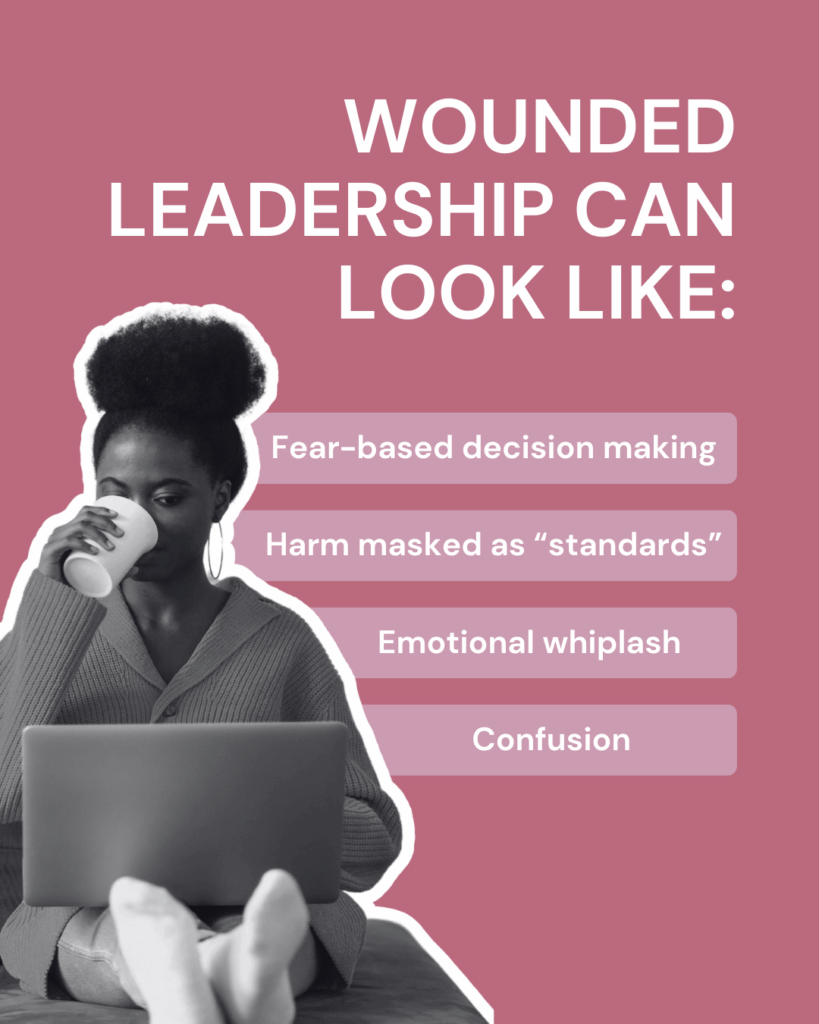
The Myth of the Lone Cook You’ve probably heard it before. “There can’t be two cooks in the kitchen.” It’s a saying that sounds wise at first glance, but underneath—especially for women, Black women, and system-impacted leaders—it’s a dog whistle dressed as wisdom. It’s not about cooking. It’s about control. About shrinking. About naming you as a threat, not a collaborator. But what if the kitchen itself was never built with your vision in mind? What if the heat you feel isn’t from passion but from burnout, chaos, or unacknowledged grief? In our conversation for the She Don’t Work Like That No More™ podcast, Azekah cracked this open with bold honesty: “Find ten cooks and go build your own kitchen.” And not the kind built from burnout and hypervigilance but from clarity, community, and courage. This is a blog post for the Chaos Drivers the ones who were forged in crisis and are learning how to live beyond it. Let’s be even clearer: the problem isn’t how many cooks are in the kitchen. The problem is the refusal to make room and the refusal to define roles with mutual respect and shared vision. Collaboration doesn’t mean crowding. It means coordination. And if your leadership can’t handle multiple gifts in one space? That’s not too many cooks. That’s too little capacity. When Chaos Is a Skill Set, Not a Season For many of us, chaos isn’t a problem to solve. It’s a way of life we’ve mastered spinning gold from disaster, finding momentum in urgency, solving fires before they even ignite. The world calls it leadership. But what it often is…is survival. In the Wounded vs. Whole Leadership™ series, we named this as the Chaos Driver pattern. It’s what happens when our brilliance is bound to adrenaline. When we confuse productivity with purpose. When we start believing that being needed is the same thing as being whole. Azekah put it plainly: “I did my time. I acknowledged that I was marginalized. I ejected from the system.” But leaving chaos doesn’t mean it leaves you. It lingers. In how we overcommit. In how we doubt. In how we keep recreating the very pace that almost broke us. And sometimes? That chaos shows up in our own leadership. Because it’s what we know. Because we’ve spent so long being led by chaos that we inherited its logic. We learned to mirror it. We began believing that urgency was intimacy, that disarray was creativity, and that uncertainty was simply part of visionary work. But when we internalize the tempo of chaos leadership—always bracing, always spinning we forget that we were never meant to live in crisis mode forever. We forget that a calling can be calm. That a mission can be methodical. That clarity can coexist with creativity. It’s not that you’re broken. It’s that your brilliance was never meant to burn. And here’s the deeper truth: You don’t have to wait for a breakdown to choose a different rhythm. The interlude doesn’t have to be forced. You can create it. You can decide that the proof of your leadership is not how many fires you put out, but how consistently you return to center. You can choose a different tempo. And if somebody’s tapping their watch because you’re not sprinting? Tell them this ain’t a relay. It’s a restoration. Interlude, Not Interruption — The Power of Unbinding In the conversation, we named this moment as an interlude not a failure, not a derailment, but a pause. A sacred inhale. A space between chapters where the nervous system catches up with the vision. For those exiting high-intensity work (like Azekah’s transition from electrical work to hair care), this isn’t just a career shift. It’s a nervous system reckoning. Azekah shared how she’s been learning to: She’s creating a life and a business that doesn’t require chaos to prove she’s capable. She’s building her own table without needing to shatter someone else’s. That is the unbinding. And it’s not just a personal shift it’s a leadership one. It means resisting the pressure to rush, to do, to prove. It means building rhythms that make room for pause, for people, and for process. It’s the moment where we say: I’m not running anymore. I’m building. Glow-Up Meets Grit — The Chaotic Resolve of Healing “You won the glow up,” I told her during our call and it wasn’t about aesthetics. It was about the internal reflection it takes to face your own avoidance, your own patterns, your own conflict-avoidant edges and still say: I’m going to have the conversation anyway. It’s one thing to lead others. It’s another to lead yourself through fear, through legacy trauma, through attachment triggers and imposter syndrome. Azekah said it best: “Having difficult conversations is a skill.” And for those of us wired for peacekeeping, that skill feels like weightlifting at first. This is the chaotic resolve not the frantic, reactive kind. But the grounded, “I’ve done my work” kind. The resolve that says: I’ve been through the fire, and I choose to lead with clarity now. Azekah shared how understanding her avoidant attachment style helped her stop projecting, start communicating clearly, and detach from the chaos of others. It’s a process and one that requires a deep sense of self-trust. Self-trust is the grit. It’s the muscle we build every time we choose clarity over confusion. Boundaries over burnout. Rest over rumination. Grit isn’t about grinding. It’s about grounding. It’s not eggs, it’s grits slow, steady, stick-to-your-ribs kind of nourishment. Because sometimes life be serving you the messiest plate, and you gotta be the one who knows when it’s time for seasoning… and when it’s time to start a new recipe. Grit is that voice inside you that whispers, You already know. And when paired with self-trust? That’s a breakfast worth leading from. Because you can glow up all day, but without self-trust, you’ll outsource your leadership to every loud voice in the room. Without self-trust, you’ll build something
